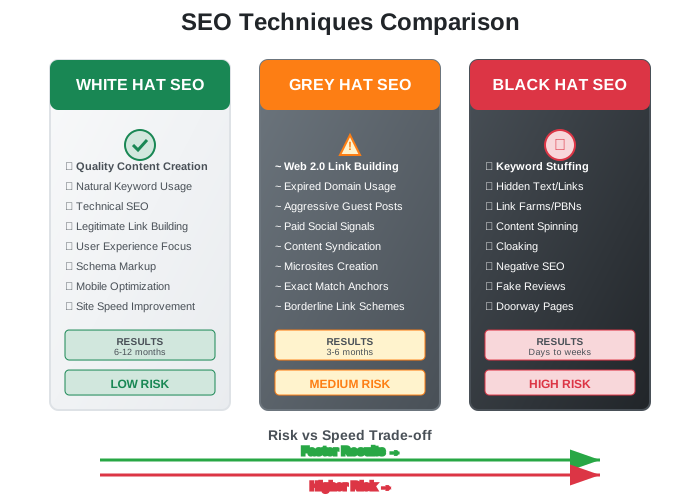
White Hat vs Black Hat vs Grey Hat SEO: The Complete Guide to Ethical SEO Practices
Discover the differences between white hat, black hat, and grey hat SEO techniques. Learn which approach suits your business and avoid costly penalties with our comprehensive guide.
Picture this: You’re sitting in an SEO conference, and someone mentions they’re using “grey hat techniques with a sprinkle of purple hat methodology.” If you’re scratching your head wondering whether SEO professionals have developed an unhealthy obsession with headwear, you’re not alone!
The truth is, SEO “hats” aren’t fashion statements – they’re classifications that help us understand different approaches to search engine optimization. And trust me, choosing the wrong hat can be more disastrous than wearing socks with sandals.
What Are SEO Hat Classifications?
SEO hat classifications originated from old Western movies where good guys wore white hats and bad guys wore black hats. In the SEO world, these colors represent different ethical approaches to optimizing websites for search engines.
Think of it as the SEO moral compass – except instead of pointing north, it points toward either sustainable success or potential disaster.
White Hat SEO: The Boy Scout Approach
White hat SEO follows all the rules, says “please” and “thank you,” and never cuts in line. These are the techniques that search engines not only approve of but actively encourage.
Key White Hat Techniques:
Content Creation & Optimization
Publishing high-quality, original content that genuinely helps users
Conducting thorough keyword research and implementing terms naturally
Creating comprehensive topic clusters and pillar pages
Optimizing for user intent rather than just search volume
Technical SEO Excellence
Improving site speed and mobile responsiveness
Implementing proper schema markup
Creating XML sitemaps and optimizing robots.txt
Ensuring clean URL structures and logical site architecture
Legitimate Link Building
Earning backlinks through quality content and outreach
Building relationships with industry publications
Creating linkable assets like research studies and tools
Guest posting on relevant, high-authority websites
Benefits of White Hat SEO:
Sustainable Results: Rankings that last and grow stronger over time
No Penalty Risk: Sleep peacefully knowing Google won’t suddenly hate your site
Brand Protection: Maintains your reputation and trustworthiness
Long-term ROI: Higher conversion rates due to better user experience
Drawbacks:
Slower Results: Can take 6-12 months to see significant improvements
Higher Investment: Requires more time, effort, and often budget
Competitive Challenges: Harder to outrank competitors using aggressive tactics (initially)
Black Hat SEO: The Dark Side of Optimization
Black hat SEO is like trying to sneak into a movie theater through the back door – it might work temporarily, but you’ll eventually get caught and banned for life.
Common Black Hat Techniques:
Content Manipulation
Keyword stuffing (cramming keywords like a Thanksgiving turkey)
Hidden text and links invisible to users
Article spinning and duplicate content
Doorway pages designed only for search engines
Link Schemes
Buying links from link farms and PBNs (Private Blog Networks)
Reciprocal linking schemes
Comment spam and forum spam
Negative SEO attacks on competitors
Technical Deception
Cloaking (showing different content to search engines vs. users)
Sneaky redirects and bait-and-switch tactics
Automated content generation
Fake reviews and testimonials
Why People Still Use Black Hat:
Quick Results: Can see ranking improvements within weeks
Competitive Pressure: Desperation to outrank competitors
Lack of Knowledge: Not understanding the long-term consequences
Severe Penalties: Complete removal from search results
Lost Revenue: Traffic drops can destroy businesses overnight
Recovery Costs: Fixing penalties costs more than doing it right initially
Reputation Damage: Trust is hard to rebuild once lost
Grey Hat SEO: Walking the Tightrope
Grey hat SEO is like jaywalking – not exactly illegal, but you’re definitely bending the rules and taking calculated risks.
Popular Grey Hat Techniques:
Link Building in the Grey Zone
Purchasing expired domains for their backlink value
Aggressive guest posting at scale
Using Web 2.0 platforms primarily for link building
Buying links from legitimate but questionable sources
Content Strategies
Content syndication across multiple platforms
Heavy internal linking with exact-match anchor text
Creating microsites for specific keywords
Republishing content with minor modifications
Social Media Manipulation
Buying social signals and engagement
Creating fake social profiles for promotion
Automated social media posting
Influencer partnerships with undisclosed compensation
When Grey Hat Makes Sense:
Competitive Industries: Sometimes necessary to compete with aggressive competitors
Quick Wins Needed: When you need faster results than pure white hat allows
Testing Boundaries: Experienced SEOs testing what search engines will tolerate
Limited Resources: Balancing risk with available time and budget
The Risks:
Algorithm Updates: What works today might be penalized tomorrow
Partial Penalties: Rankings may drop without complete removal
Wasted Effort: Time spent on techniques that stop working
Reputation Concerns: Clients may lose trust if techniques are exposed
The Lesser-Known SEO Hats
Red Hat SEO
Red hat combines white and black hat techniques strategically, like a chess grandmaster who knows exactly when to make bold moves. It’s aggressive but calculated, using data to determine acceptable risk levels.
Blue Hat SEO
Blue hat focuses on testing and scientific methodology. These are the SEO nerds (said with love) who A/B test everything and make decisions based on data rather than assumptions.
Green Hat SEO
Green hat is the beginner-friendly approach, focusing on learning and sustainable growth. It’s like training wheels for SEO – safe, educational, and designed to build skills gradually.
Which Hat Suits Which Type of Agency?
Enterprise SEO Agencies → White Hat Purists
Large agencies working with Fortune 500 companies can’t afford to take risks. They stick to white hat techniques exclusively because:
Brand reputation is everything for big clients
Penalties could mean million-dollar lawsuits
Long-term strategies align with corporate planning cycles
Compliance requirements often mandate ethical practices
Growth-Focused Agencies → Strategic Grey Hat
Agencies specializing in rapidly scaling businesses often employ calculated grey hat techniques:
Startups need quick wins to show investors progress
Competitive markets require aggressive tactics
Risk tolerance is higher when there’s less to lose
Speed to market can determine business success
Local SEO Specialists → White Hat with Grey Touches
Local SEO agencies typically use white hat methods with occasional grey hat tactics:
Local businesses need sustainable long-term presence
Competition is often less aggressive than national markets
Unfortunately, many low-cost providers resort to black hat techniques to maintain profit margins:
Automated tools and shortcuts reduce labor costs
Clients often don’t understand the risks involved
Volume-based business models prioritize quantity over quality
Lack of expertise leads to poor technique selection
How to Choose the Right SEO Approach
Assess Your Risk Tolerance
Low Risk Tolerance (Choose White Hat):
Established business with significant online revenue
Brand reputation is crucial to your success
Long-term growth is more important than quick wins
You have budget for quality content and legitimate outreach
Medium Risk Tolerance (Consider Grey Hat):
Competitive industry requiring aggressive tactics
Need to show results within 3-6 months
Have experience managing SEO risks
Can pivot quickly if techniques stop working
High Risk Tolerance (Proceed with Extreme Caution):
New website with nothing to lose
Testing market viability before major investment
Have multiple domains/websites to spread risk
Understand and accept potential consequences
Industry Considerations
Highly Regulated Industries (Finance, Healthcare, Legal): These sectors should stick exclusively to white hat techniques due to:
Strict compliance requirements
Higher scrutiny from search engines
Reputation damage could have legal consequences
Customer trust is paramount
E-commerce and Retail: Online stores can often use strategic grey hat techniques because:
Competitive pressure is intense
Revenue directly correlates with rankings
Multiple product pages spread penalty risk
Quick wins can significantly impact sales
B2B and Professional Services: These businesses typically benefit from white hat approaches:
Long sales cycles align with longer SEO timelines
Trust and credibility drive conversions
Content marketing naturally supports white hat SEO
Professional reputation matters more than quick rankings
The Role of White Label SEO Partners
For many agencies, partnering with specialized SEO providers offers the best of both worlds. White label SEO partnerships allow agencies to:
Maintain Quality Standards: Work with providers who specialize in ethical techniques
Scale Efficiently: Handle more clients without increasing internal risk
Focus on Core Competencies: Let SEO experts handle the technical aspects
Reduce Liability: Share responsibility for technique selection and implementation
When evaluating white label link building solutions, ensure your provider uses ethical techniques that align with your risk tolerance and client expectations.
Advanced Link Building Strategies
Understanding SEO hats becomes particularly important when implementing sophisticated link building strategies:
Link Pyramids and Wheels
Advanced techniques like link pyramids and link wheels can fall into different hat categories depending on execution:
White Hat Implementation:
Using only high-quality, relevant websites
Creating genuine, valuable content for each link
Building natural link relationships over time
Focusing on user value rather than just SEO benefit
Grey Hat Implementation:
Using some lower-quality but legitimate websites
Scaling the process with templates and automation
Focusing primarily on SEO value with secondary user value
Building links faster than naturally possible
Black Hat Implementation:
Using PBNs and fake websites
Spinning content or using duplicate content
Building links solely for SEO manipulation
Creating unnatural link patterns that trigger penalties
The Future of SEO Hat Classifications
As search engines become more sophisticated, the lines between different SEO approaches continue to evolve:
AI and Machine Learning Impact
Pattern Recognition: Search engines better detect unnatural link patterns
Content Quality Assessment: AI can identify thin or manipulated content
User Behavior Analysis: Engagement metrics become more important ranking factors
Personalization: Results vary more based on individual user preferences
Emerging Trends
E-A-T Focus: Expertise, Authoritativeness, and Trustworthiness become more critical
Voice Search Optimization: Natural language and conversational content gain importance
Mobile-First Indexing: Mobile user experience becomes the primary ranking factor
Core Web Vitals: Technical performance metrics directly impact rankings
Red Flags: Identifying Black Hat Providers
Protect yourself and your clients by recognizing these warning signs:
Unrealistic Promises
“Guaranteed #1 rankings in 30 days”
“We’ll get you 1000 backlinks this month”
“Our secret technique Google doesn’t know about”
“Results guaranteed or your money back”
Secretive Practices
Won’t explain their methodology
Refuse to provide reporting or transparency
Use vague terms like “proprietary techniques”
Can’t provide examples of successful long-term clients
Pricing Red Flags
Significantly cheaper than market rates
One-size-fits-all pricing regardless of industry
Require long-term contracts with no flexibility
Extra charges for “premium” techniques
Best Practices for Sustainable SEO Success
Building a Solid Foundation
Comprehensive SEO Audit: Understand your current position and identify opportunities
Competitive Analysis: Research what’s working for successful competitors
Keyword Strategy: Develop a balanced approach targeting various search intents
Content Planning: Create a sustainable content calendar focused on user value
Implementation Guidelines
Start with White Hat: Build a solid foundation using only ethical techniques
Test Carefully: If considering grey hat techniques, test on less critical pages first
Monitor Closely: Track rankings, traffic, and penalties daily
Document Everything: Keep records of all techniques used for future reference
Long-term Strategy
Invest in Quality: Higher upfront costs lead to better long-term results
Build Relationships: Focus on genuine connections rather than transactional link building
Stay Updated: Keep current with algorithm changes and industry best practices
Measure What Matters: Focus on business metrics, not just vanity metrics
Conclusion: Choose Your Hat Wisely
The SEO hat you choose ultimately depends on your business goals, risk tolerance, and ethical standards. While black hat techniques might offer tempting shortcuts, they’re like building a house on quicksand – the foundation will eventually give way.
White hat SEO might take longer to show results, but it builds lasting success that grows stronger over time. Grey hat techniques can be effective when used strategically, but they require expertise and constant monitoring to avoid penalties.
Remember, SEO isn’t just about rankings – it’s about building a sustainable online presence that serves your audience and grows your business. The best hat is the one that aligns with your long-term vision and helps you sleep peacefully at night.
Whether you’re managing SEO in-house or working with partners, understanding these classifications helps you make informed decisions about your digital marketing strategy. After all, in the world of SEO, the only thing worse than wearing the wrong hat is not wearing one at all.
Ready to implement ethical SEO strategies that deliver lasting results? Focus on techniques that benefit your users first, and the search engines will follow. Your future self (and your clients) will thank you for choosing the right path from the beginning.