
In the complex landscape of local SEO, businesses often face a critical decision: should they invest in creating dedicated location-based service pages on their website, or focus exclusively on optimizing their Google Business Profile (formerly Google My Business)? The answer isn’t straightforward, and the wrong choice can cost thousands in lost local traffic and revenue.
Recent studies show that 76% of people who search for something nearby on their smartphone visit a related business within a day. However, the path to capturing this traffic requires a sophisticated understanding of how location-based service pages and Google Business Pages work together—and sometimes compete against each other.
Google’s local search algorithm has evolved dramatically since the introduction of the “Pigeon” update in 2014. Today’s local search results are influenced by over 200 ranking factors, with proximity, relevance, and prominence being the primary pillars. However, the interplay between owned website content (location pages) and Google-controlled business profiles creates unique opportunities and challenges.
Definition and Structure:
Location-based service pages are dedicated website pages optimized for specific geographic areas where a business provides services. Unlike generic service pages, these pages target location-specific keywords and provide localized content, contact information, and service details.
Technical Architecture:
Effective location pages follow a specific URL structure and schema markup implementation:
/services/[service]/[location] or /[location]/[service]Advanced Implementation Strategy:
Platform Evolution and Current Features:
Google Business Profiles have transformed from simple directory listings to comprehensive business showcases with booking integration, product catalogs, and advanced messaging features. The platform now supports multiple location management, service area definitions, and real-time customer interaction.
Advanced GBP Strategies:
The Problem We Encountered:
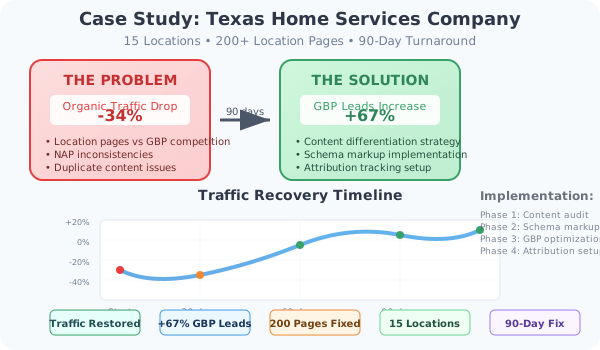
In Q4 2024, we managed a home services company with 15 locations across Texas. They had invested heavily in location-based service pages, creating over 200 pages targeting various city-service combinations. However, their organic traffic dropped 34% after a Google Business Profile optimization campaign.
Root Cause Analysis:
Through detailed technical analysis, we discovered:
Our Solution Framework:
Results Achieved: Within 90 days, we restored organic traffic to previous levels while increasing GBP-driven leads by 67%. The key was understanding that these platforms serve different stages of the customer journey.
High-Competition Markets: In saturated local markets, location pages provide more content real estate to establish topical authority. They’re essential when competitors dominate the map pack, offering an alternative path to visibility through organic search results.
Complex Service Offerings: Businesses with technical or consultative services benefit from detailed location pages that can explain service processes, showcase case studies, and build trust through comprehensive content that GBP limitations can’t accommodate.
Multi-Service, Multi-Location Operations: Companies serving multiple services across various locations need the organizational structure that only a well-architected website can provide. Location pages allow for sophisticated internal linking and service-location cross-referencing.
Immediate Local Intent: For businesses targeting customers with immediate, location-based needs (restaurants, emergency services, retail), GBP optimization delivers faster results and better conversion rates due to prominent map pack placement.
Mobile-First Customer Base: Industries with predominantly mobile users (food delivery, local services, retail) benefit more from GBP optimization since mobile searches heavily favor map pack results over traditional organic listings.
Limited Content Resources: Small businesses with limited content creation capabilities should focus on GBP optimization, which requires less ongoing content maintenance while providing substantial local visibility benefits.
Content Funnel Design:
Cross-Platform Content Strategy:
Schema Markup Optimization:
LocalBusiness Schema Requirements:
- @type: LocalBusiness or specific business type
- name: Exact business name matching GBP
- address: Complete, formatted postal address
- telephone: Primary business phone number
- openingHours: Structured hours specification
- areaServed: Geographic service area definition
- hasMap: Link to Google Maps listing
URL Structure Standards:
/locations/[city-state]//services/[service]/[city-state]/Internal Linking Architecture:
Location Page Metrics:
Google Business Profile Metrics:
Multi-Touch Attribution: Implement advanced attribution models that recognize the customer journey often involves both location pages and GBP interactions before conversion. Use Google Analytics 4’s data-driven attribution model to understand the true value of each touchpoint.
Conversion Path Analysis: Track common conversion paths such as:
AI and Machine Learning Integration: Google’s continued advancement in understanding local intent through AI means content quality and relevance will become increasingly important. Location pages must provide genuine value beyond basic service and contact information.
Voice Search Optimization: With growing voice search adoption, optimize for conversational queries like “where can I find [service] near me” by including natural language patterns in location page content.
Visual Search Evolution: Google’s visual search capabilities are expanding. Ensure location pages include high-quality, geo-tagged images and optimize image alt text with location-specific keywords.
Content Scalability: Develop content templates and processes that can efficiently create unique, valuable location pages without falling into duplicate content traps. Focus on local market research, customer interviews, and area-specific service variations.
Technical Infrastructure: Implement robust technical SEO foundations that can support growth:
Focus primarily on Google Business Profile optimization with supporting location pages. The ROI on comprehensive location page development may not justify the investment compared to GBP optimization benefits.
Implement a hybrid strategy with detailed location pages for high-value markets and streamlined GBP optimization across all locations. Prioritize markets based on competition levels and revenue potential.
Invest in comprehensive location-based service page architecture with advanced technical SEO implementation, supported by enterprise-level GBP management tools and automation.
The choice between location-based service pages and Google Business Profile optimization isn’t binary—it’s about understanding how these platforms complement each other in capturing different aspects of local search intent. Location pages excel at building topical authority and serving customers in research phases, while Google Business Profiles dominate immediate-intent searches and mobile-first interactions.
Success in local SEO requires a nuanced understanding of your market dynamics, customer behavior, and competitive landscape. The most effective strategies integrate both approaches, using location pages to build comprehensive local authority while leveraging Google Business Profiles for immediate visibility and conversion opportunities.
As local search continues evolving with AI, voice search, and changing consumer behaviors, businesses that understand the distinct advantages of each platform—and how to integrate them effectively—will dominate their local markets. The key is not choosing one over the other, but orchestrating both to create a comprehensive local search presence that captures customers at every stage of their journey.