Discover the pros and cons of automated backlinks vs manual backlinks to choose the best link building strategy for SEO growth and long-term success.

Link building has been the backbone of SEO since search engines began crawling the web. It’s the digital equivalent of word-of-mouth marketing – when websites link to you, they’re essentially vouching for your content. But here’s where things get interesting: should you build these links manually, one by one, or let automation handle the heavy lifting?
The debate between automated and manual link building is like choosing between a carefully crafted home-cooked meal and fast food. Both will fill you up, but the quality, satisfaction, and long-term effects can be dramatically different.
Manual link building is exactly what it sounds like – the hands-on, human-driven approach to acquiring backlinks. It involves real people researching opportunities, crafting personalized outreach emails, building relationships, and earning links through genuine value creation.

Think of manual link building as digital networking. You’re not just throwing your business card at everyone in the room; you’re having meaningful conversations, understanding what others need, and finding ways to provide value. This approach requires time, patience, and genuine human insight.
Quality Over Quantity When humans handle link building, they can assess the true value of a linking opportunity. A skilled link builder doesn’t just look at domain authority scores – they evaluate whether the linking site’s audience would genuinely benefit from your content. This human judgment is crucial because relevancy matters far more than flashy metrics when it comes to sustainable SEO success.
Relationship Building Manual link building fosters real relationships within your industry. When you personally reach out to a blogger, podcast host, or industry expert, you’re not just asking for a link – you’re potentially starting a long-term professional relationship. These connections can lead to guest posting opportunities, collaboration projects, and even business partnerships down the line.
Contextual Relevance Human link builders understand context in ways that automation simply cannot. They can identify the perfect paragraph in an article where your link would provide genuine value to readers. This contextual placement makes links feel natural and helpful rather than forced or spammy.
Brand Awareness Every manual outreach effort is an opportunity to introduce your brand to new audiences. Even when someone doesn’t provide a link, they now know your brand exists, which plants seeds for future opportunities.
Compliance with Guidelines Manual link building naturally aligns with search engine guidelines because it focuses on creating genuine value. When humans are making decisions about link placement, they’re more likely to follow ethical practices and avoid tactics that could trigger penalties.
Time-Intensive Process Manual link building moves at human speed, which can feel glacially slow in our instant-gratification digital world. A single high-quality link might require weeks of research, outreach, and follow-up. For businesses needing quick results, this pace can be frustrating.
High Resource Requirements Quality manual link building requires skilled professionals who understand SEO, content marketing, and relationship building. These experts don’t come cheap, and the labor-intensive nature of the work means costs can add up quickly.
Scalability Challenges There are only so many hours in a day, and manual processes have natural limits. Even the most efficient link building team can only handle a finite number of outreach campaigns simultaneously. This limitation can be problematic for large websites or aggressive growth strategies.
Emotional Toll Let’s be honest – manual link building involves a lot of rejection. You might send 100 perfectly crafted emails and receive only a handful of responses. This constant “no” can be demoralizing for teams and individuals.
Inconsistent Results Human performance varies. Some days your outreach specialist might be on fire, securing multiple high-quality links. Other days, they might struggle to get a single positive response. This inconsistency can make it difficult to predict campaign outcomes.
Automated link building leverages software, tools, and algorithms to identify opportunities and acquire links with minimal human intervention. These systems can process vast amounts of data, identify patterns, and execute repetitive tasks at superhuman speeds.
Modern automation tools can analyze competitor backlinks, identify potential linking opportunities, craft outreach templates, and even follow up on communications. Some advanced platforms claim to handle the entire link building process from start to finish.
Speed and Efficiency Automation operates at digital speed. While a human might analyze 20 potential linking opportunities per hour, an automated system can evaluate thousands in the same timeframe. This efficiency is particularly valuable for large-scale campaigns or time-sensitive projects.
Cost-Effectiveness Once set up, automated systems can operate with minimal ongoing costs. There’s no need to pay hourly wages for repetitive tasks, and the cost per link acquisition typically decreases as scale increases. For budget-conscious businesses, this economic advantage is compelling.
Consistent Performance Automated systems don’t have bad days. They don’t get tired, discouraged, or distracted. This consistency means more predictable results and reliable performance over time.
Data-Driven Insights Automation tools excel at processing and analyzing data. They can identify patterns in successful link building campaigns, track performance metrics, and provide insights that humans might miss. This data can inform strategy improvements and optimization efforts.
24/7 Operation While your human team sleeps, automated systems keep working. This around-the-clock operation can accelerate campaign timelines and maximize productivity.
Lack of Personal Touch Automated outreach often feels robotic and impersonal. Recipients can usually tell when they’re receiving a template message, leading to lower response rates and potentially damaging your brand’s reputation.
Quality Control Issues Automated systems struggle with nuance and context. They might identify a website with high authority metrics but miss that it’s completely irrelevant to your industry. This can result in low-quality links that provide little SEO value.
Risk of Spam Poorly configured automated systems can send excessive emails to the same recipients or target inappropriate websites. This spam-like behavior can damage your sender reputation and potentially result in penalties from email providers.
Limited Relationship Building Automation focuses on transactions rather than relationships. While it might secure a link, it rarely builds the ongoing partnerships that can provide long-term value.
Compliance Risks Automated systems may not always follow best practices or ethical guidelines. They might engage in tactics that violate search engine guidelines or industry standards, potentially putting your website at risk.
When discussing automated link building, it’s crucial to understand the potential risks involved. These risks can have serious consequences for your website’s search engine rankings and overall online reputation.
Search engines have become increasingly sophisticated at detecting unnatural link patterns. Auto-generated links often exhibit telltale signs that can trigger algorithmic penalties or manual actions. When link building strategies become too mechanical or follow obvious patterns, search engines may devalue these links or penalize the entire website.
Automated systems often prioritize quantity over quality, leading to links from irrelevant or low-quality websites. These links not only provide little SEO value but can actually harm your website’s authority and rankings. A single high-quality, relevant link is worth more than dozens of automated links from generic directories or irrelevant websites.
When automated outreach goes wrong, it can damage your brand’s reputation. Spam-like emails, irrelevant link requests, or aggressive automated tactics can create negative associations with your brand. In today’s connected world, word spreads quickly about companies that engage in poor digital practices.
Many automated link building practices violate the terms of service of various platforms and tools. This can result in account suspensions, blacklisting, or other penalties that can significantly impact your marketing efforts.
Auto-generated links often lack the sustainability of manually built relationships. When algorithms change or websites update their policies, automated links are more likely to be removed or devalued. Manual relationships, on the other hand, can adapt and evolve over time.
The most successful link building strategies often combine elements of both automated and manual approaches. Smart marketers use automation for research and initial prospecting while relying on human expertise for relationship building and quality control.
Modern link building increasingly relies on hybrid strategies that leverage the best of both worlds. Automation can handle the heavy lifting of prospect research and initial contact, while humans take over for relationship building and quality assurance. This approach maximizes efficiency while maintaining the personal touch that leads to high-quality links.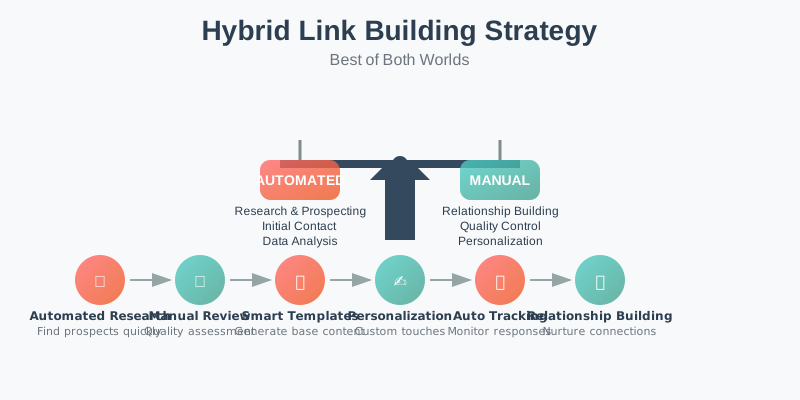
Different types of links require different approaches. Editorial links within relevant content typically require manual outreach and relationship building, while certain directory submissions or resource page inclusions might be suitable for automation. Understanding these distinctions helps determine the appropriate strategy for each link building opportunity.
Whether you choose automated or manual approaches, strategic thinking remains crucial. Advanced techniques like link pyramids require careful planning and execution that benefits from human oversight, even when automation assists with implementation.
One of the most important considerations in link building is understanding what truly makes a link valuable. While metrics like Domain Authority (DA) and Page Authority (PA) are popular, they don’t tell the complete story.
A link from a smaller, niche-relevant website often provides more value than one from a high-authority but irrelevant site. Search engines prioritize relevance because it improves user experience. A cooking blog linking to a kitchen equipment retailer is more valuable than a high-authority tech blog making the same connection.
The context surrounding a link significantly impacts its value. A link naturally embedded within relevant content carries more weight than one placed in a sidebar or footer. Manual link building excels at securing these contextual placements because humans can identify the most appropriate locations for links.
Search engines value editorial links – those given freely by website owners because they believe the linked content provides value to their readers. These links signal genuine endorsement and are much more valuable than paid or reciprocal links.
A link’s ability to drive qualified traffic and engagement is often more important than its SEO value. Links that introduce your brand to genuinely interested audiences can lead to conversions, brand awareness, and future linking opportunities.
The decision between automated and manual link building depends on several factors specific to your business and goals.
Manual link building typically requires higher upfront investment but can provide better long-term ROI through relationship building and sustainable practices. Automated approaches might offer lower initial costs but can carry higher risks and potentially lower-quality results.
If you need quick results for a specific campaign or launch, automation might provide the speed you need. However, if you’re building a sustainable long-term SEO strategy, manual approaches typically offer better foundation-building capabilities.
Some industries lend themselves better to automated approaches, while others require the personal touch of manual outreach. B2B companies often benefit more from manual relationship building, while certain B2C niches might find success with automated strategies.
Conservative businesses might prefer the safety and quality control of manual approaches, while more aggressive marketers might accept the risks of automation for faster results. Understanding your risk tolerance is crucial for making the right choice.
Many businesses find success in outsourcing their link building efforts to professionals who can blend automated efficiency with manual expertise. Professional services can provide the best of both worlds while allowing businesses to focus on their core competencies.
Professional link building services understand the nuances of different approaches and can tailor strategies to specific business needs. They have the tools, relationships, and expertise to execute effective campaigns while minimizing risks.
As search engines continue to evolve, the link building landscape will undoubtedly change. Artificial intelligence and machine learning are making automated systems more sophisticated, while search algorithms become better at detecting artificial patterns.
The future likely belongs to hybrid approaches that combine human creativity and relationship-building skills with the efficiency and data processing capabilities of automation. Success will depend on understanding when to use each approach and how to integrate them effectively.
The choice between automated and manual link building isn’t really a choice at all – it’s about finding the right balance for your specific situation. Both approaches have their place in modern SEO strategies, and the most successful campaigns often incorporate elements of both.
Manual link building provides the quality, relationships, and long-term sustainability that form the foundation of robust SEO strategies. Automated approaches offer the speed, efficiency, and scalability that modern businesses often require. The key is understanding when to use each approach and how to minimize the risks while maximizing the benefits.
Remember that link building is just one component of a comprehensive SEO strategy. Quality content, technical optimization, and user experience all play crucial roles in search engine success. Links should support and amplify these other efforts, not replace them.
Whether you choose automation, manual approaches, or a hybrid strategy, success depends on focusing on quality, relevance, and genuine value creation. The links that provide the most long-term benefit are those that would exist even if search engines didn’t consider them for rankings – because they genuinely help users discover valuable resources.
If you’re looking to implement a professional link building strategy that combines the best of both approaches while minimizing risks, consider working with experienced professionals who understand the nuances of modern SEO. Hire Pro Digital Marketers’ link building experts can help you develop and execute a strategy that delivers sustainable results while protecting your brand’s reputation and search engine standings.
The digital landscape will continue evolving, but the fundamental principle remains the same: build links that provide genuine value to users, and success will follow.