
Creating a link wheel is like performing surgery on your SEO strategy—you need steady hands, the right tools, and absolutely zero room for error. One wrong move, and instead of healing your rankings, you might flatline them completely. But don’t worry, we’re not going to let that happen to you.
If you’ve already read our comprehensive guide to link wheel strategy, you know what a link wheel is and why it matters. Now it’s time to roll up our sleeves and learn how to build one without triggering Google’s penalty alarm bells.
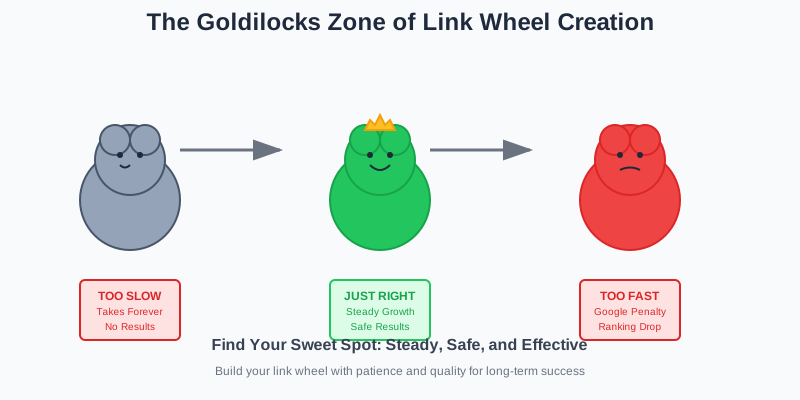
Remember Goldilocks? Not too hot, not too cold, but just right? That’s exactly where your link wheel needs to be. Too aggressive, and Google will slap you with a penalty faster than you can say “manual action.” Too conservative, and you’ll be waiting for results until the next ice age.
Think of this like assembling your Avengers team—each platform needs to bring something unique to the table:
Tier 1 Properties (Your Heavy Hitters):
Tier 2 Properties (Your Support Squad):
Pro Tip: Start with 5-7 properties maximum. You’re not trying to conquer the entire internet on day one. Remember, Rome wasn’t built in a day, and neither should your link wheel.
Here’s where most people mess up—they try to publish everything at once like they’re launching fireworks on New Year’s Eve. Instead, space out your content creation over 2-3 weeks minimum.
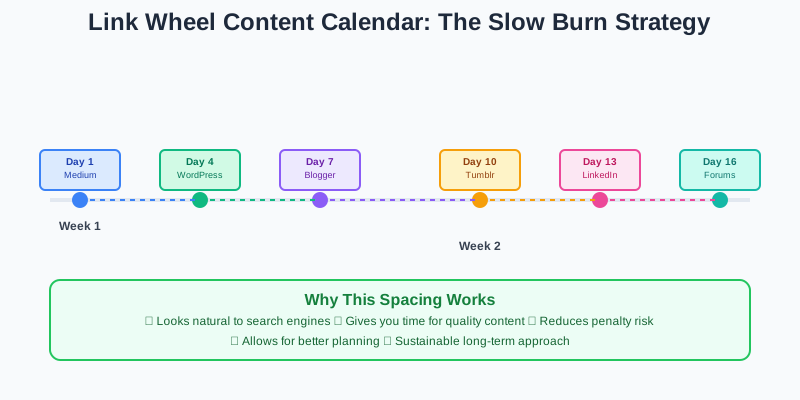
Week 1:
Week 2:
This pacing looks natural to search engines and gives you time to create quality content instead of rushing through copy-paste jobs.
This is where the magic happens. Your link wheel should flow like a well-choreographed dance, not a chaotic mosh pit.
The Golden Rules:
Don’t dump all your links in at once like you’re emptying a bucket. Instead, use the “slow burn” approach:
Here’s a reality check: If your content reads like it was written by a caffeinated robot at 3 AM, your link wheel will fail spectacularly. Each piece needs to provide genuine value.
Content Quality Checklist:
Your anchor text should sound like a beautiful symphony, not a broken record. Here’s the composition:

Set up monitoring for:
Your link wheel should look so natural that even you start believing it happened organically. If someone stumbles across your network, they should think, “Wow, this person really knows their stuff across multiple platforms.”
Using the same content across multiple properties is like wearing the same outfit to every party—people notice, and it’s not a good look.
If your anchor text reads like a keyword dictionary exploded, you’re doing it wrong. Variety is the spice of life and SEO.
Building everything in one week screams “manipulation” to search engines. Patience, grasshopper.
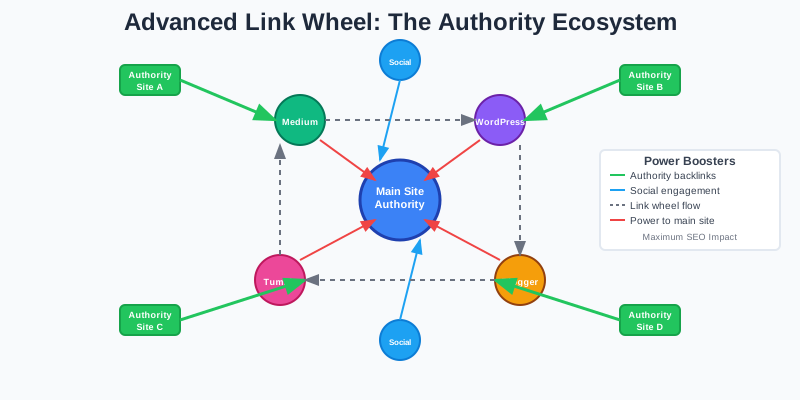
Place your link wheel properties between high-authority sites in your content strategy. If you’re also using link pyramid strategies, this creates a powerful combined effect.
Get real engagement on your link wheel content. Comments, shares, and genuine interaction add credibility to your network.
Sometimes, despite your best efforts, you need backup. If you’re dealing with:
Consider working with professional link building experts who eat, sleep, and breathe this stuff daily.
Creating a safe and effective link wheel is part art, part science, and part patience. It’s not about gaming the system—it’s about creating a legitimate network of valuable content that happens to benefit your main site.
Remember, the goal isn’t to trick search engines; it’s to create a web of authority that genuinely helps users discover your content through multiple pathways. When done right, your link wheel becomes a powerful asset that continues delivering results long after the initial effort.
Now stop reading and start building. Your future self will thank you when those rankings start climbing, and your competitors are left wondering what magic you’ve been working behind the scenes.
Ready to take your link building to the next level? Check out our ultimate link wheel guide for more advanced strategies and insights.