Understanding GEO, AEO, and Their Impact on SEO Strategy
Discover the future of SEO with GEO, AEO, and GSO—AI-powered strategies transforming how brands rank in generative and answer-driven search.
The digital marketing landscape is experiencing a seismic shift. While Search Engine Optimization (SEO) has been the cornerstone of online visibility for decades, new players are entering the field: Generative Engine Optimization (GEO) and Answer Engine Optimization (AEO). As artificial intelligence reshapes how people search for and consume information, digital marketers must adapt their strategies to stay competitive.
This comprehensive guide will explore what GEO and AEO mean for your business, how they differ from traditional SEO, and most importantly, how to integrate these emerging optimization strategies into your digital marketing arsenal.
What is GEO (Generative Engine Optimization)?
Generative Engine Optimization (GEO) represents a fundamental shift in how we approach content optimization. Unlike traditional SEO, which focuses on ranking in search engine results pages (SERPs), GEO aims to optimize content for AI-powered generative engines like ChatGPT, Claude, and Google’s Bard.
Key Characteristics of GEO:
AI-First Approach: Content is optimized specifically for AI language models to understand and reference
Contextual Depth: Emphasis on comprehensive, contextually rich content that AI can synthesize
Semantic Optimization: Focus on meaning and context rather than just keywords
Structured Data: Enhanced use of schema markup and structured data to help AI understand content relationships
How GEO Works:
When users interact with AI-powered search engines, they’re not looking for a list of links to click through. Instead, they want direct, synthesized answers to complex questions. GEO ensures your content becomes a trusted source that AI engines reference when generating these responses.
What is AEO (Answer Engine Optimization)?
Answer Engine Optimization (AEO) is the practice of optimizing content to appear in AI-generated answers and responses. While often used interchangeably with GEO, AEO specifically focuses on ensuring your brand and content are accurately represented when AI engines provide direct answers to user queries.
Core Elements of AEO:
Question-Focused Content: Creating content that directly answers specific user questions
Authoritative Sources: Establishing your brand as a credible source for AI engines to reference
Factual Accuracy: Ensuring all information is precise and up-to-date
Citation-Worthy Content: Developing content that AI engines will want to cite and reference
The AEO Advantage:
With AEO, your goal isn’t just to rank—it’s to become the go-to source that AI engines cite when answering user questions. This positions your brand as an authority in your field, even when users don’t directly visit your website.
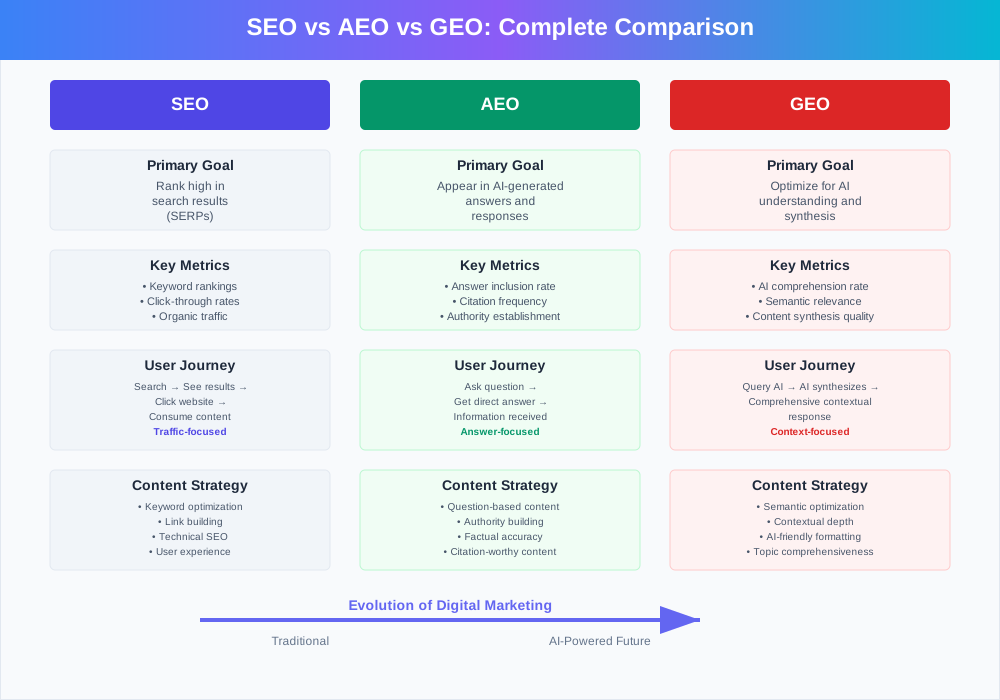
SEO vs AEO vs GEO: Understanding the Differences
Traditional SEO: The Foundation
Primary Goal: Rank high in search engine results pages (SERPs)
Key Metrics:
Keyword rankings
Click-through rates (CTR)
Organic traffic
Backlink profile
Optimization Focus:
Keyword research and targeting
On-page optimization
Technical SEO
Link building
User experience signals
User Journey: User searches → Sees results → Clicks through to website → Consumes content
Answer Engine Optimization (AEO): The Direct Response
Primary Goal: Appear in AI-generated answers and responses
Key Metrics:
Answer inclusion rate
Brand mention accuracy
Citation frequency
Authority establishment
Optimization Focus:
Question-based content creation
Factual accuracy and credibility
Structured data implementation
Authority building
Content comprehensiveness
User Journey: User asks question → AI provides direct answer → User gets information immediately
Generative Engine Optimization (GEO): The Synthesis
Primary Goal: Optimize for AI understanding and synthesis
Key Metrics:
AI comprehension rate
Content synthesis quality
Semantic relevance
Contextual accuracy
Optimization Focus:
Semantic optimization
Contextual depth
AI-friendly formatting
Comprehensive topic coverage
Relationship mapping
User Journey: User queries AI → AI synthesizes information from multiple sources → User receives comprehensive, contextual response.
The Strategic Importance of GEO and AEO in 2025
Changing Search Behaviors
Modern users are increasingly turning to AI-powered search engines for:
Complex, multi-part questions
Conversational queries
Research and analysis
Decision-making support
Creative assistance
The Traffic Paradigm Shift
While traditional SEO focuses on driving traffic to your website, GEO and AEO prioritize brand visibility and authority, even when users don’t click through. This shift requires a new approach to measuring success and ROI.
Competitive Advantage
Early adopters of GEO and AEO strategies gain a significant advantage by:
Establishing authority in AI-generated responses
Building brand recognition in new search formats
Capturing user attention in the growing AI search market
Future-proofing their digital marketing strategies
How to Implement GEO and AEO Strategies
1. Content Strategy Transformation
Traditional SEO Approach: Target specific keywords with optimized content GEO/AEO Approach: Create comprehensive, authoritative content that answers complex questions
Best Practices:
Develop topic clusters rather than individual keyword pages
Create in-depth, authoritative content pieces
Focus on expertise, authoritativeness, and trustworthiness (E-A-T)
Address user intent at multiple levels
2. Technical Implementation
Structured Data Enhancement:
Implement comprehensive schema markup
Use JSON-LD format for better AI understanding
Mark up FAQs, how-to content, and product information
Utilize organization and author markup for authority
AI-Friendly Formatting:
Create clear content hierarchies
Use descriptive headings and subheadings
Implement logical content flow
Provide context and background information
3. Question-Based Content Creation
Research Strategy:
Analyze common user questions in your industry
Monitor AI engine responses for gaps
Study competitor content strategies
Use tools like Answer The Public and AlsoAsked
Content Development:
Create comprehensive FAQ sections
Develop how-to guides and tutorials
Build resource libraries and knowledge bases
Produce comparison and analysis content
4. Authority Building
Expertise Demonstration:
Showcase credentials and experience
Provide detailed author bios and company information
Include relevant certifications and awards
Link to authoritative sources and research
Trust Signals:
Maintain accurate, up-to-date information
Provide clear contact information
Include customer testimonials and reviews
Display industry affiliations and partnerships
Measuring Success in the GEO/AEO Era
New Metrics to Track
Brand Mention Monitoring:
Track how often your brand is mentioned in AI responses
Monitor accuracy of information presented
Measure sentiment and context of mentions
Content Synthesis Quality:
Evaluate how well AI engines understand your content
Assess the accuracy of AI-generated summaries
Monitor which content pieces are most frequently referenced
Authority Establishment:
Track citation frequency across AI platforms
Monitor industry recognition and mentions
Measure expert positioning in AI responses
Tools and Techniques
AI Response Monitoring:
Regularly query AI engines with industry-related questions
Document and analyze response patterns
Track changes in AI behavior over time
Content Performance Analysis:
Use analytics to identify high-performing content
Monitor user engagement with comprehensive content
Track the relationship between content depth and performance
Integration Strategy: Combining SEO, AEO, and GEO
The Holistic Approach
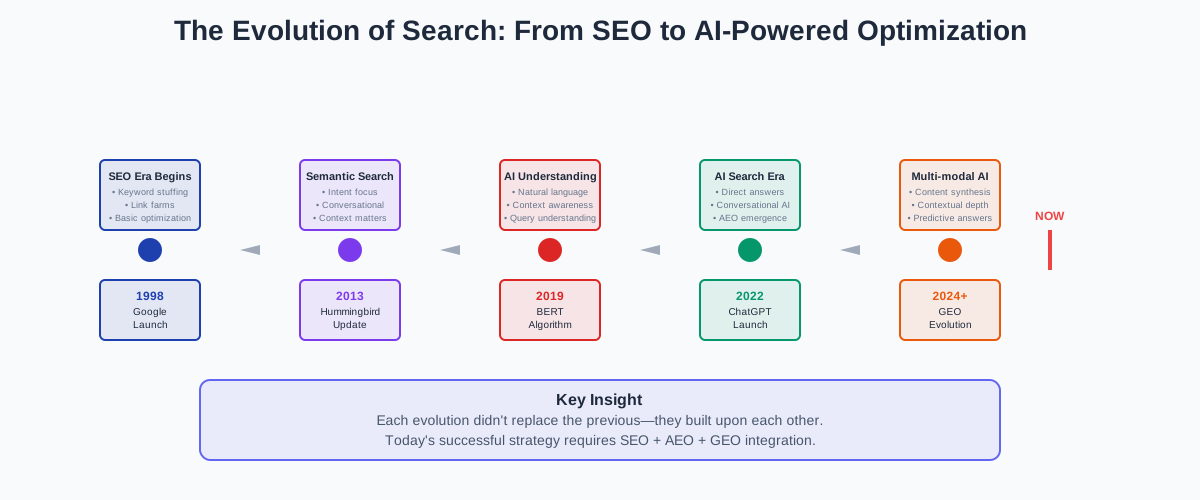
Rather than replacing SEO, successful digital marketers integrate GEO and AEO into their existing strategies:
Phase 1: Foundation
Maintain strong traditional SEO practices
Begin incorporating GEO/AEO elements into new content
Analyze current content for optimization opportunities
Phase 2: Enhancement
Expand content depth and comprehensiveness
Implement advanced structured data
Develop question-based content strategies
Phase 3: Optimization
Fine-tune content for AI understanding
Build authority through expert positioning
Create comprehensive topic coverage
Content Strategy Framework
Topic Coverage:
Identify core topics in your industry
Map out comprehensive subtopics and questions
Create content that addresses entire topic ecosystems
Develop interconnected content pieces
Quality Standards:
Prioritize accuracy and factual correctness
Ensure comprehensive coverage of topics
Maintain high editorial standards
Provide unique insights and perspectives
Industry-Specific Considerations
E-commerce and Retail
Focus Areas:
Product information optimization
Comparison and review content
Shopping guides and recommendations
Customer service and support content
Opportunities:
Product queries in AI engines
Purchasing decision support
Brand recommendation positioning
Customer education and guidance
B2B and Professional Services
Focus Areas:
Industry expertise demonstration
Complex problem-solving content
Thought leadership positioning
Service capability showcasing
Opportunities:
Industry analysis and insights
Best practice guidance
Problem-solution matching
Expert positioning in AI responses
Healthcare and Medical
Focus Areas:
Medical accuracy and authority
Patient education content
Treatment information and guidance
Health and wellness resources
Opportunities:
Medical query responses
Health information accuracy
Patient support and guidance
Medical professional positioning
Common Challenges and Solutions
Challenge 1: Lack of Direct Traffic
Problem: GEO and AEO may not drive direct website traffic Solution: Focus on brand awareness, authority building, and indirect conversion paths
Challenge 2: Measurement Difficulties
Problem: Limited analytics for AI engine performance Solution: Develop custom monitoring systems and proxy metrics
Problem: AI engines and their algorithms change frequently Solution: Maintain flexibility and continuous monitoring/adaptation
Future Trends and Predictions
AI Engine Evolution
Multimodal Integration: AI engines will increasingly incorporate images, videos, and audio Personalization: More personalized responses based on user context and history Real-time Information: Better integration of current events and real-time data
Optimization Opportunities
Voice and Conversational Search: Optimizing for voice-activated AI assistants Visual Search Integration: Incorporating image and video optimization Local and Contextual Optimization: Location and context-aware optimization
Industry Implications
Publishing and Media: Balancing content sharing with traffic protection E-commerce: Direct product recommendations and purchasing assistance Professional Services: Establishing thought leadership and expert positioning
Getting Started with HirePro Digital Marketers
Assessment and Strategy Development
Our team of digital marketing experts can help you:
Audit your current content for GEO/AEO opportunities
Develop a comprehensive optimization strategy
Implement technical and content improvements
Monitor and measure performance across all channels
Implementation Services
Content Strategy and Creation:
Comprehensive topic research and planning
Expert content development and optimization
Technical implementation and markup
Ongoing monitoring and optimization
Technical Optimization:
Structured data implementation
AI-friendly formatting and organization
Performance monitoring and analysis
Continuous improvement and adaptation
Why Choose HirePro Digital Marketers?
Expertise: Deep understanding of traditional SEO and emerging optimization strategies
Innovation: Early adoption and implementation of cutting-edge techniques
Results: Proven track record of driving measurable business outcomes
Support: Ongoing guidance and optimization for long-term success
Conclusion: Embracing the Future of Digital Marketing
The emergence of GEO and AEO represents a fundamental shift in how businesses approach digital marketing. While traditional SEO remains important, the future belongs to those who can successfully optimize for AI-powered search engines and answer engines.
By understanding the differences between SEO, AEO, and GEO, and implementing comprehensive strategies that address all three, businesses can position themselves for success in the evolving digital landscape. The key is to start now, experiment with different approaches, and continuously adapt as the technology evolves.
The future of digital marketing is here, and it’s powered by artificial intelligence. Those who embrace these changes and optimize for the new reality will gain a significant competitive advantage in the years to come.
Ready to future-proof your digital marketing strategy? Contact HirePro Digital Marketers today to learn how we can help you implement cutting-edge GEO and AEO strategies that drive real business results.
HirePro Digital Marketers – Your Partner in Digital Marketing Excellence